
Originally posted to Clean Air Council Website on August 7, 2025
Clean Air Council launched its first-ever Emergency Ride Home Pilot program in partnership with the Delaware Valley Regional Planning Commission (DVRPC) on Tuesday, August 5th. This initiative is a pilot enhancement to DVRPC’s current Emergency Ride Home (ERH) program, which uses cost reimbursement to support transit riders when emergencies disrupt their commute plans: ERH serves those who live and/or work in southeastern Pennsylvania. The pilot is funded through a Travel Options Program (TOP) grant from DVRPC.
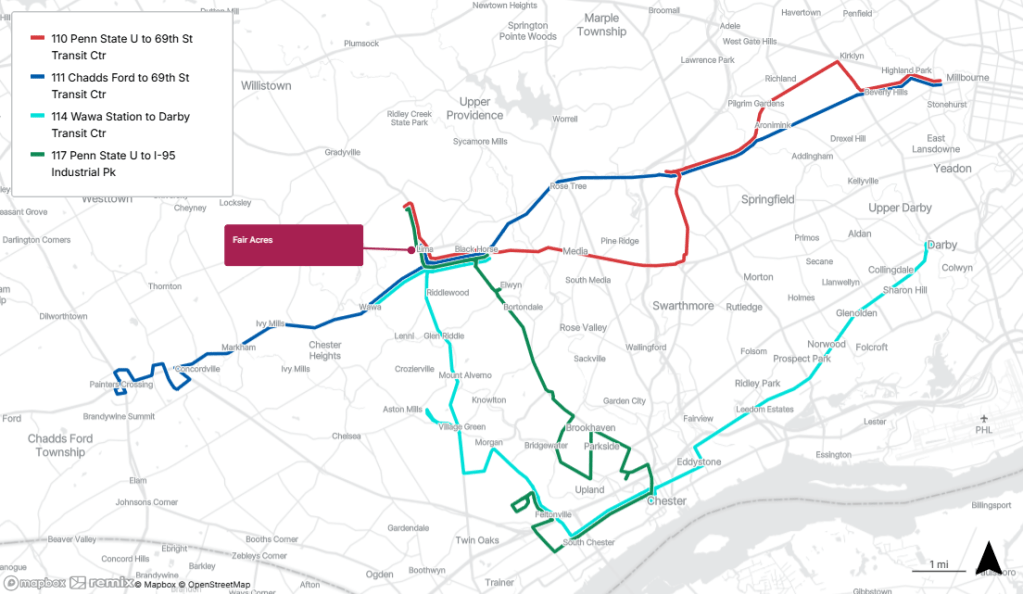
Clean Air Council’s Emergency Ride Home Pilot Program allows transit riders on four routes that access Fair Acres (SEPTA bus routes 110, 111, 114, & 117) to receive an Uber voucher of up to $50 during a qualifying emergency. Qualifying commuters—individuals dedicated to taking these Delaware and Philadelphia county bus lines at least twice a week to work or who live within the Fair Acres region— can redeem a voucher up to two times for the duration of the program when registered with Share-A-Ride. Transit is a sustainable way of getting around the area, and helps to lower carbon emissions. This Emergency Ride Home program seeks to help transit riders feel safer in the case of a qualifying emergency when transit is seriously delayed, canceled, or doesn’t reach the site of the emergency.
“Clean Air Council is excited to be launching this program as it helps to advance our sustainable transportation goals and will benefit residents living and working in the area”, said Titania Markland, Sustainable Transportation Program Manager at Clean Air Council. “Having a safety net during emergencies helps to remove a barrier that can prevent residents from taking public transit, which is a more sustainable way to commute and better for the environment.”
“The Travel Options Program (TOP) funds new, innovative programs and projects that help reduce drive-alone travel in the region, and improve access to a host of safe travel options. DVRPC is excited to support the Clean Air Council, who has been a long-time partner in promoting Transportation Demand Management (TDM) programs”, said Stacy Bartels, Manager, Office of TDM Strategy and Marketing at DVRPC. “This trial project will assess the ability of the region’s Emergency Ride Home (ERH) to be more widely available to anyone who signs up without incurring a cost to use it, minimizing a financial hurdle some riders may encounter and ensuring everyone has a way to get home safe.”
CLEAN AIR COUNCIL’S EMERGENCY RIDE HOME PILOT PROGRAM
The Emergency Ride Home Pilot Program provides a “safety net” for those who utilize SEPTA bus routes 110, 111, 114, or 117 to work at least two times per week.
In the event of an unexpected personal or family emergency or illness, unscheduled overtime, or if a rider cannot reach the site of the emergency via transit in a timely fashion, registered commuters can request a code for a free Uber ride home, to their car, or to the place of the emergency. Also if a rider’s regular bus route is delayed for over 30 minutes or cancelled, and this will cause an unsafe situation or undue expense for the rider (e.g. late fees for daycare or missed medical appointment), ERH can be considered.
How does the Emergency Ride Home Pilot Program work?
- Commuters can check their eligibility and register with Share-A-Ride here.
- When their Share-A-Ride profile is completed, commuters are eligible to request a free ride (up to $50) due to a qualifying emergency situation.
- When an ERH ride is requested through the Share-A-Ride website, the commuter will receive a unique code to use when paying through the Uber app and be on their way.
- Eligible and approved commuters must have or create an account with Uber to redeem the voucher code.
 Feet First Philly